



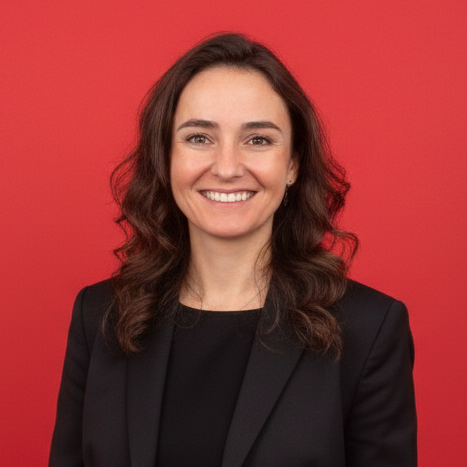
Dr. Katherine Tatarinov
Inside the institution
LinkedInTenured, published scholar with direct access to Swiss and EU academic leadership. Understands governance, institutional politics, pedagogical integrity and grant dynamics from the inside.

Pre-seed · Confidential · 2026Brand storyline
We do not build generic AI for students. We build for the professor. Authorship belongs back where it started.
Generative AI is eroding university IP and pedagogical authority.
Tortin empowers professors instead of replacing them.
A tenured professor and an AI-native builder.
Enterprise cycles cracked via non-procurement budgets.
24 months to profitability and category ownership.

Act I
The authorship crisis is not coming. It already happened.
ChatGPT becomes the 2 AM default tutor. Answers arrive detached from the syllabus, and the feedback loop that tells faculty where learning breaks simply disappears.
When faculty turn to generic AI to prep, what comes back is textbook consensus: no course readings, no case studies, none of the framing that made the course theirs. Twenty years of expertise, returned as something any school could have written.
Zero telemetry on student interactions with external engines — while liability for hallucination, integrity and FERPA/GDPR sits squarely with the university.
“Generative AI didn't just automate tasks; it triggered an authorship crisis. Students bypass faculty completely. Professors lose their voice. And administrations have lost sovereign control over data, integrity, and pedagogical governance.”

The professor stays the author
The professor designs the entire lesson — slides, activities, games, assessment — then runs the class from the same console, controlling exactly what each student sees and when. The tutor is one instrument in that orchestra, not the product.
“Let's work it out together — what does Lecture 6, slide 12 say about marginal cost before we solve for equilibrium?”
Source: Week 6 deck, p.12
Slides, activities, games, problem sets and rubrics are generated from the professor's own material and edited by them — the lesson is theirs before class starts.
The professor decides what appears on every screen and when: release a slide, open a task, unlock or lock the tutor, read confusion live and change course mid-hour.
Socratic, coaching or drill; corpus-only or open web allowed — every behaviour is theirs to set, per course. The system executes their teaching, it doesn't substitute it.
Works standalone from day one, or plugs into the LMS the university already runs. No migration, no committee, no waiting on central IT.
“Universities tried banning AI, and it failed within 48 hours. What professors actually need is orchestration. They upload their material and build the entire lesson — slides, activities, games, assessment — then run the class live from the same console, deciding what each student sees and when. The tutor is one instrument they conduct, grounded in their material, citing their exact slide.”
Feedback style, past exam questions, student blindspots.
Slides, readings, rubrics — compounding every semester.
AI that behaves like this professor, not any professor.
Replacing Tortin would mean discarding years of refined course intelligence. That is not a feature comparison — it is an institutional asset the university would have to abandon.
“Why can't a university simply switch to a generic LMS copilot later? Because of this flywheel. It builds a compounding institutional knowledge bank that makes Tortin virtually impossible to replace.”

Inside the institution
LinkedInTenured, published scholar with direct access to Swiss and EU academic leadership. Understands governance, institutional politics, pedagogical integrity and grant dynamics from the inside.

Shipping at start-up speed
LinkedInComputer-science trained builder and enterprise growth operator. Scaled Capdesk through its acquisition by Carta; rapid prototyping, growth loops and B2B SaaS scaling.
TrustFaculty open doors for a colleague, not a vendor. Pilots land inside departments because one of us already sits in them.
VelocityWhat a faculty conversation reveals on Monday is running in the product by Friday — the loop most EdTech never closes.
“Enterprise EdTech is littered with products built by engineers who have never stood in front of a lecture hall. We bridge the chasm between academic trust and rapid AI execution.”
Single faculty, one academic year. Paid from a discretionary teaching budget or grant — no central procurement. HEC Lausanne, EDHEC and Durham landed this way.
Per-seat faculty licence across a department, LMS integrated. HEC Lausanne is in these discussions now for an expanded professor count use
Campus-wide governance and a unified AI gateway. The provost signs only after the course memory already lives inside the institution.
“Selling to universities usually takes 18 agonizing months. We don't wait for provosts to form committees. We land at Tier 1 — funded directly by a professor's pedagogical grant — and expand once the department sees 122 hours saved.”
Revenue compounds from CHF 63K to CHF 4.7M by 2030, with contracted run-rate (exit ARR) reaching CHF 3.9M. The 2027 investment year builds product and pipeline; net income crosses zero in 2029.
“Over 1,000 learners are actively using Tortin across five elite paid pilots, including HEC Lausanne, LUMS, University of Geneva, and the UN. Our QSTP incubation gives us a sovereign landing pad into the GCC higher-ed market.”
Swiss academic prestige (HEC Lausanne, IMD, Geneva) paired with GCC state-backed anchors via QSTP. Rigor plus capital — each one hand-won.
Hub-and-spoke through Swissnex, European university consortia and Qatar Foundation. One anchor win opens streamlined 1-to-N procurement across its network.
Professors publish, cite and keynote with their tutor in the loop. Discovery stops being outbound; installation is a 15-minute Moodle/Canvas LTI plugin.
“Because professors publish and present at international conferences, our academic virality drives zero-touch, 15-minute LMS installations globally.”

Act V — The vision
One faculty-owned standard, campus by campus, continent by continent.
Live lesson infrastructure, multi-model gateway, governance hardening.
Expansion teams across the UK, EU and MENA.
Peer-reviewed outcome studies proving learning gains.
EU AI Act readiness, FERPA/GDPR certification.
Faculty revolt, EU AI Act enforcement, and student normalisation converged in 2026. The platform is burning. This is the window.
“This gives us 24 months of runway to hit our Series Seed targets — and to make faculty-owned AI the institutional standard rather than an experiment.”